
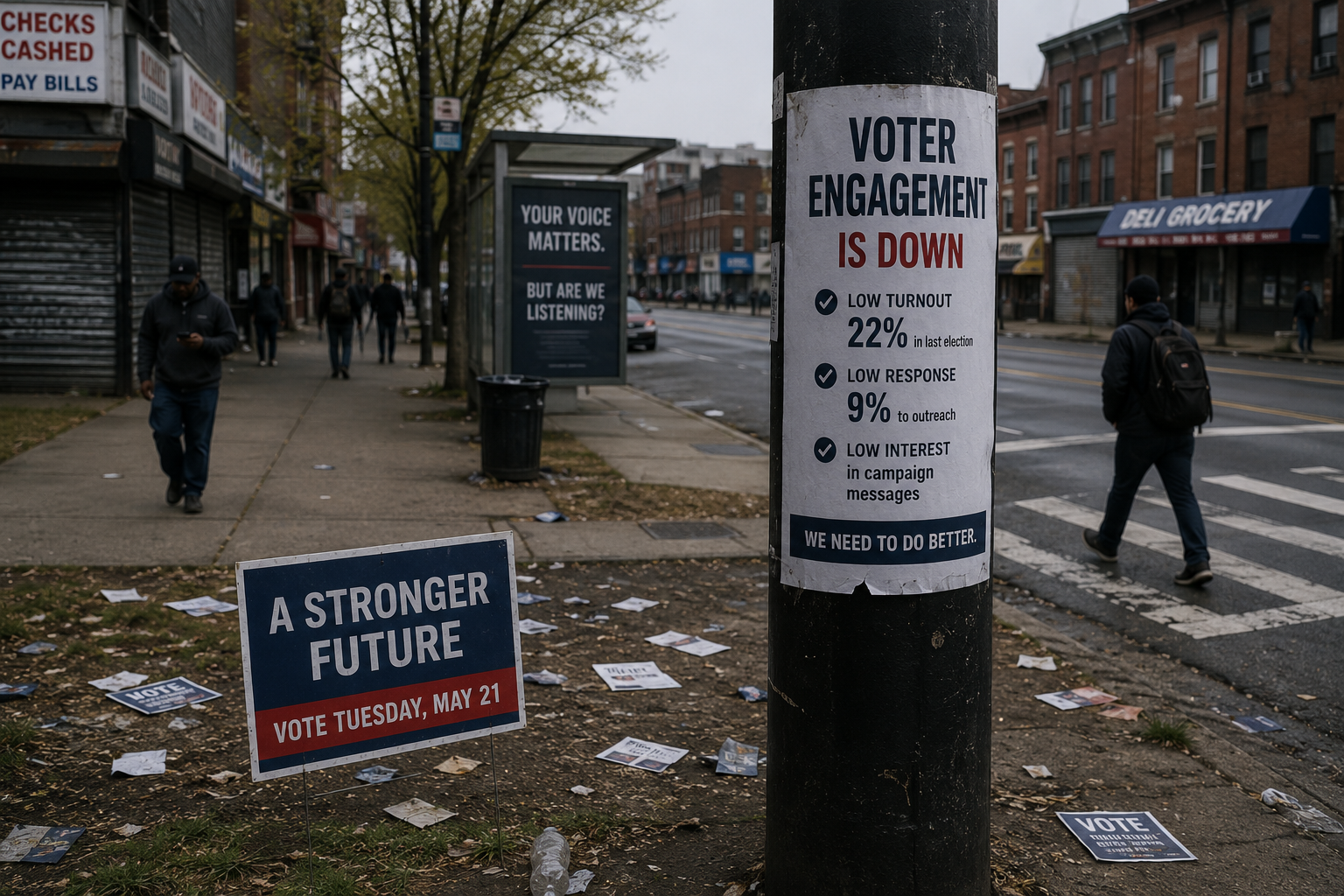
Poor voter engagement is one of the biggest reasons political campaigns struggle to gain momentum. If you plan to run for office NYC, improving voter engagement requires more than posting on social media or increasing campaign events. It starts with understanding your district, identifying the right voters, and building a structured outreach strategy. Strong NYC campaign strategy combines voter intelligence, targeted messaging, and organized field operations to create meaningful connections that translate into votes.
What Is Voter Engagement?
Voter engagement refers to how effectively a campaign connects with voters throughout the election cycle.
It includes every interaction that encourages voters to:
- Learn about a candidate
- Attend campaign events
- Sign petitions
- Volunteer
- Donate
- Vote on Election Day
High voter engagement is built through consistent communication, relevant messaging, and strategic outreach not one-time campaign efforts.
Why Campaigns Struggle with Voter Engagement
Many campaigns assume low engagement means voters are uninterested.
In reality, poor engagement is often the result of weak campaign organization.
Common causes include:
- Generic messaging
- Limited understanding of district priorities
- Poor volunteer coordination
- Inefficient canvassing
- Lack of voter data
- Inconsistent follow-up
Rather than increasing campaign activity randomly, successful campaigns first identify where engagement is breaking down.
How to Improve Voter Engagement Strategically
Improving engagement requires disciplined execution supported by reliable campaign systems.
Use Voter Data to Prioritize Outreach
Not every voter should receive the same level of attention.
Reliable voter data NYC helps campaigns identify:
- Frequent voters
- Low-turnout neighborhoods
- Newly registered voters
- Target voter universes
- Communities with high persuasion potential
This allows campaign teams to focus resources where engagement can have the greatest impact.
Build Organized Campaign Systems
Strong engagement depends on consistency.
Campaigns should establish systems for:
- Volunteer scheduling
- Voter contact tracking
- Canvassing assignments
- Follow-up communication
- Petition management
- Daily reporting
When everyone works from the same campaign infrastructure, outreach becomes more efficient and measurable.
Create District-Specific Messaging
Generic campaign promises rarely inspire action.
Every neighborhood has different priorities, concerns, and expectations.
Candidates who tailor messaging using district-level insights build greater credibility and stronger voter relationships.
Personalized communication consistently outperforms broad, one-size-fits-all messaging.
Integrate Field and Digital Outreach
Successful campaigns combine face-to-face engagement with digital communication.
Campaign teams should continuously compare:
- Door-knocking results
- Email engagement
- Text messaging responses
- Social media interactions
- Volunteer recruitment
- Community event participation
Regular analysis helps campaigns refine outreach instead of repeating ineffective tactics.
How Campaign Infrastructure Strengthens Voter Engagement
Engagement improves when campaigns have systems that support every interaction.
Effective campaign infrastructure NYC provides:
- District intelligence
- Voter targeting
- Canvassing routes
- Volunteer coordination
- Outreach tracking
- Performance reporting
For example, instead of sending volunteers into neighborhoods at random, campaigns can prioritize high-impact locations based on voter registration trends and historical turnout, improving both field efficiency and petition strategy.
Campaigns looking to strengthen voter outreach can explore how Gotham Campaigns supports candidates and organizations with strategic infrastructure built specifically for New York City elections.
Why Gotham Campaigns Focuses on Data Before Engagement
Many campaigns try to solve poor engagement by increasing advertising or posting more frequently.
Gotham Campaigns begins somewhere different.
The guiding principles remain:
- Clarity before action.
- Data before messaging.
- Structure before launch.
By understanding who should be contacted, where outreach should happen, and how campaigns should measure progress, candidates build stronger relationships with voters while using resources more efficiently.
This disciplined approach transforms engagement from a guessing game into a measurable campaign process.
Who Benefits Most from Better Voter Engagement?
Every candidate benefits from improving voter engagement, regardless of campaign experience.
First-Time Candidates
New candidates often have limited name recognition.
Strategic voter engagement helps introduce the candidate while building trust throughout the district.
Community Leaders Running for Office
Community advocates usually begin with established local relationships.
Structured engagement expands those relationships into broader voter support across the district.
Challengers Running Against Incumbents
Incumbents frequently benefit from familiarity among voters.
Targeted outreach allows challengers to focus on neighborhoods where meaningful conversations can shift voter opinion.
Campaigns Operating with Limited Resources
Campaigns with smaller budgets cannot afford inefficient outreach.
If funding is limited, this guide on what to do if your campaign lacks funding explains how disciplined planning can maximize available resources while maintaining campaign momentum.
Winning Voter Engagement Requires Strategy, Not Volume
Campaign success is not determined by how many messages are sent.
It depends on whether the right voters receive the right message at the right time.
The strongest campaigns replace:
- Guesswork with voter intelligence
- Broad outreach with targeted engagement
- Manual coordination with campaign infrastructure
- Assumptions with measurable performance
For anyone preparing to run for office NYC, improving voter engagement starts with organized strategy—not simply increasing campaign activity.
Conclusion
Poor voter engagement is rarely a voter problem.
It is usually a campaign strategy problem.
New York City campaigns require district-specific voter intelligence, organized campaign infrastructure, consistent execution, and continuous refinement to build meaningful voter relationships.
Campaigns are engineered not guessed.
Gotham Campaigns helps candidates improve engagement through data-driven targeting, structured operations, and technology designed specifically for New York City’s political landscape.
Ready to strengthen your voter outreach? Contact Gotham Campaigns to get your district data, schedule a strategy consultation, and start building a campaign that connects with the voters who matter most.
Use district-specific voter data, targeted messaging, organized field operations, and consistent follow-up to engage voters more effectively.
Start by understanding ballot access requirements, building a campaign strategy, organizing volunteers, and using reliable voter data to guide outreach.
While not required, an experienced NYC political consultant can help develop data-driven outreach strategies, improve voter targeting, and strengthen overall campaign performance.